
Founder POV
Design a Link in Bio that Converts
Learn how to design a link in bio that actually converts—by showcasing creator deals clearly, guiding attention, and giving your recommendations a place to work over time.

Aardvark Team
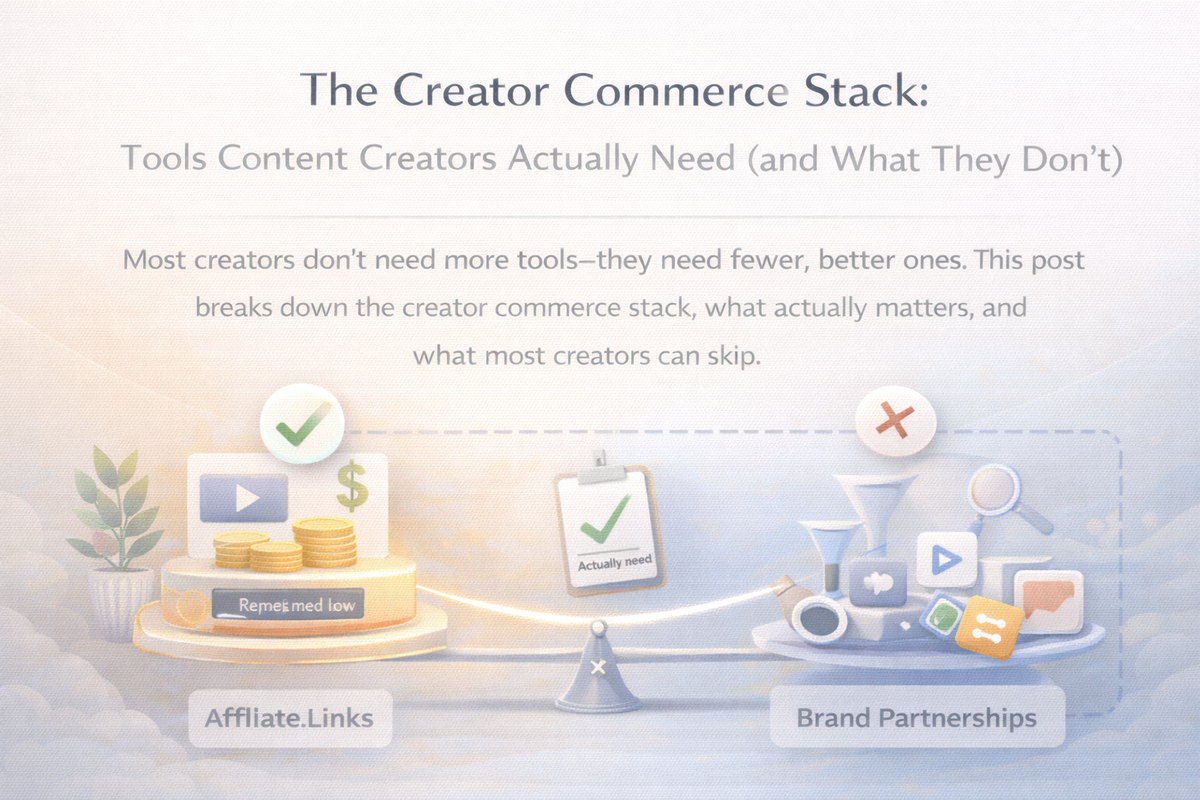
Most creators don’t need more tools—they need fewer, better ones. This post breaks down the creator commerce stack, what actually matters, and what most creators can skip.
At some point, every creator hits the same wall.
They don’t feel under-skilled.
They don’t feel unmotivated.
They just feel… overloaded.
More tools.
More dashboards.
More links.
More things to “manage.”
And somehow, despite all of it, earning still feels harder than it should.
That’s not a discipline problem.
It’s a stack problem.
Creators usually build their tool stack reactively.
They add:
Nothing here is wrong individually.
But over time, the stack becomes fragmented — and fragmentation kills leverage.
The goal isn’t to have more tools.
It’s to have fewer tools doing the right jobs.
Most creators only need four layers to run creator commerce cleanly.
Anything beyond this is usually optional — or compensating for a missing piece.
This is the obvious layer.
Cameras.
Editing software.
Publishing platforms.
Every creator has this. It’s table stakes.
But this layer doesn’t earn on its own.
It creates the conditions for earning.
This is where affiliate links, referral links, and codes live.
Attribution tools answer one question:
“Did this recommendation lead to a purchase?”
Most creators technically have this layer — but it’s fragile.
Links expire.
Codes get forgotten.
Attribution breaks quietly.
When attribution isn’t reliable, creators compensate with repetition.
That’s when things start to feel bad.
This is the layer most creators skip — and the one that matters most.
Organization answers questions like:
Without this layer:
Most creators try to patch this with spreadsheets or notes.
That works — until it doesn’t.
This is the layer almost no creators have — and the one that changes everything.
Timing answers:
“Is this deal visible when someone is actually ready to buy?”
Most tools optimize for posting.
Almost none optimize for intent.
That mismatch is why:
When timing is solved, promotion drops naturally.
This part surprises people.
Most creators do not need:
Those tools add surface area, not leverage.
They increase cognitive load without fixing the underlying problem.
When creators feel overwhelmed by tools, it’s usually because:
So they keep adding tools to compensate.
The right stack does the opposite:
Aardvark isn’t meant to replace:
It exists to fix the missing middle:
That’s why it reduces:
Instead of asking creators to do more, it lets the system carry weight.
Here’s the filter I use:
Does this tool reduce repetition, or does it ask me to work around it?
If it reduces repetition, it’s leverage.
If it adds reminders, it’s friction.
Creators don’t need perfect stacks.
They need coherent ones.
Learn how to design a link in bio that actually converts—by showcasing creator deals clearly, guiding attention, and giving your recommendations a place to work over time.

Adding creator deals is what allows your recommendations to work around the clock. This guide explains what creator deals are, why they matter, and how to add your first one in Aardvark.
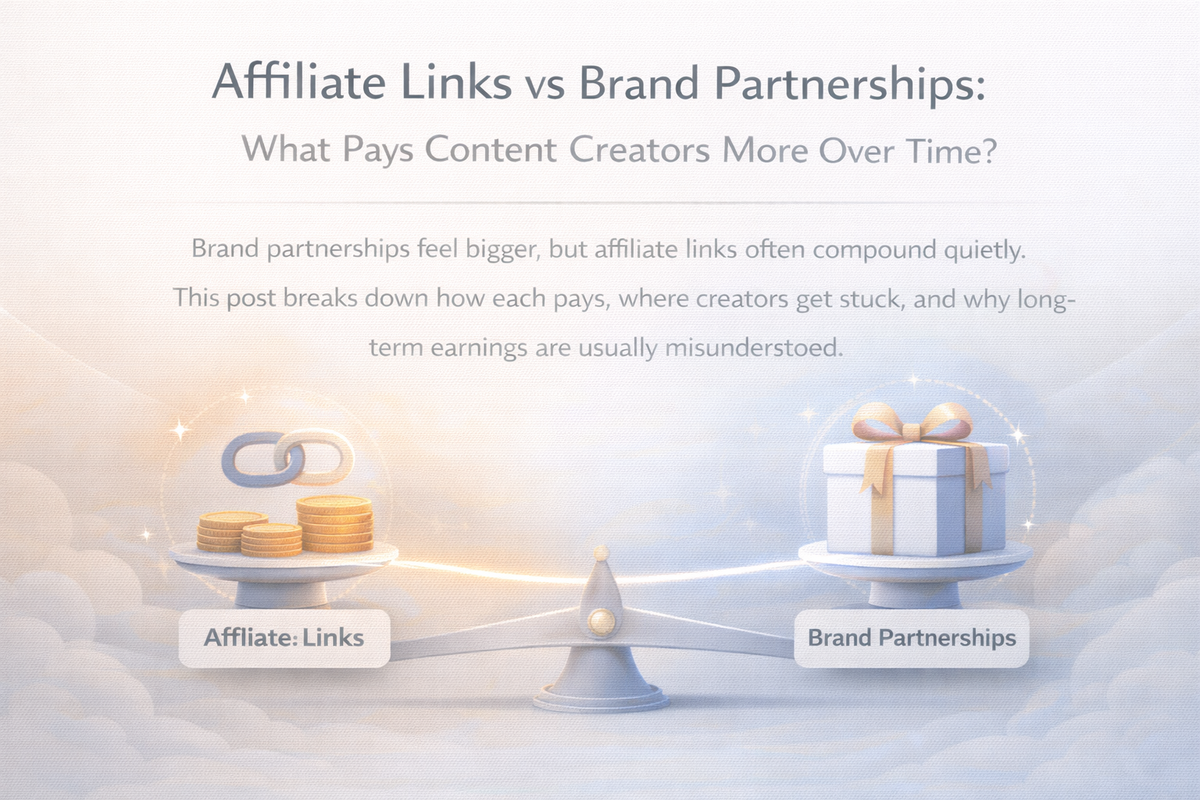
Brand partnerships feel bigger, but affiliate links often compound quietly. This post breaks down how each pays, where creators get stuck, and why long-term earnings are usually misunderstood.
